
In the old days, Malaysians did not have access to supermarkets and hypermarkets. Shopping was done in small-scale sundry shops. There were not a lot of products on display. In terms of cleaning products, the most you would see, would be a couple of basic disinfectants.
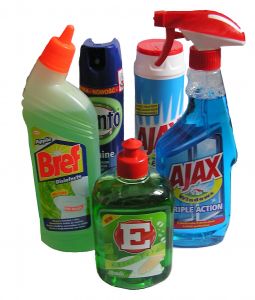
Today on the other hand, the supermarket aisle offers us a dazzling array of household cleaning products for just about every nook and cranny of our homes. What could be easier than just grabbing a couple of these items and handing them over to the maid? (Given that most families require a double income just to survive in today’s prices, more and more cleaning is handled by maids as women work similar hours to men and arrive home too late to do housework).
These stuff make you and the Earth sick
There are two rather serious problems with all the household cleaning products on offer at the supermarket. One – they are expensive. Two – they are loaded with unhealthy and highly toxic chemicals. The compound impact of both these factors is that we are paying more, to purchase products which can cause long-term health issues for our families and serve to pollute the environment in the course of being manufactured and disposed of. Research has also demonstrated links between allergies such as sinusitis and asthma, to the prevalence of chemicals in the home.
What is the alternatives?
So what should we do? Well, maybe it’s time we went back to basics, to the cleaning solutions our grandparents used, before the advent of commercial cleaning solutions. Let’s look at some natural, cheap alternatives to chemical cleaning solutions.
Baking Soda, White Vinegar, Lemon Juice, Bath Soap, Cornstarch
The ubiquitous baking soda is an excellent cleaner and deodorizer. It can even remove light stains from painted surfaces, such as pencil or crayon marks left by your kids. White vinegar makes a great de-greaser, while lemon juice will disinfectant and clean while adding a fresh scent, as well. Normal bath soap (unscented, not the more fancy shower gel) also makes a great cleaner for just about anything. Cornstarch, is also good for more than just cooking. You can also use it to clean windows, carpets and rugs, as well as to polish furniture.
Home-made Cleaning Agents
Here are some basic recipes for simple, home-made, no- toxic cleaning agents. For a general all-purpose cleaner, mix ½ a cup of vinegar and ¼ cup of baking soda into 2 litres of water. This can be used to clean just about any kitchen or bathroom appliance or surface. A stronger mixture of vinegar and baking soda can remove certain stains, especially if lemon juice is applied to the stain. You can even rub a slice of lemon over greasy pans to cut through grease, fat and oil. Pure white vinegar and lemon juice (undiluted) can be used to remove mould and mildew from bathrooms and other damp areas.
There are a number of websites online which offer recipes for homemade cleaning and home care products, as a simple Google search will reveal. Go through these and identify some easy-to-use replacements for some of the homecare products you are now buying from the grocery store.
However, obviously, we cannot substitute every cleaning or homecare product, for a homemade one. Solutions containing organic ingredients such as lemon juice cannot be kept for a long time. A fresh lemon would need to be cut each time it needs to be used. This could be time consuming when one is rushing after a busy day. It could end up being and not worth the savings in the long run.
So, here’s a plan to get the best of both worlds.
First, make a list of the normal commercial homecare products that you buy, and a corresponding list of prices.
Next, identify the ones that you use the most. These are likely to be items such as dishwashing liquid, grease removers and general all-purpose cleaners for day-to-day cleaning of kitchens and bathrooms – appliances and surfaces. Items you use less frequently are likely to include drain pipe uncloggers, detergents for floor mopping, window cleaners, etc.
Third, make a list of products you could substitute or supplement. For example, when washing a greasy pan, instead of using half a container of dishwashing liquid, you could use a baking-powder-and-vinegar scrub to get most of the grease off, and then finish the job with the dishwashing liquid.This strategy saves you a lot of dishwashing liquid and ultimately, some cash too, as baking powder and vinegar are extremely cheap compared to dishwashing liquid. On the other hand, you are not likely to be able to substitute or supplement a powerful chemical such as drain pipe unclogger, effectively and easily. So it’s wise to pick and choose.
Thus, comparing your list of products that you normally purchase and their prices, against potential substitutes/supplements, will enable you to come up with a more balanced shopping list for your household chemicals – whereby you only buy what you need, and use what you have bought, sparingly. This approach has the added benefit, of being more green and environment-friendly too, as ingredients such as vinegar, lemon juice and baking powder, are biodegradable and do not harm the environment.
Tell us what you think and practice nowadays? Are you opting for the convenience or being greener and safer?

1 Response to "Save Money on Household Cleaning Products and Be Greener, Too!"
[…] we should try as much as possible to save money. Yes, I’m afraid this means, cutting down or eliminating ALL non-essential expenses. The usual […]