
Tansel Ali is the founder and director of Yellow Elephant Memory Pty Ltd and was 3 Times Australian Memory Champion.The story of Tansel Ali is very interesting. We had been extremely fortunate to have our good friend Tansel on board this book project despite his busy schedule. We met with Tanselon 3 December 2013 to talk about his life journey.
In addition to three-time Australian Memory Champion, he is also Memory Records Holder, keynote speaker, memory coach, mental athlete, corporate trainer, a published author and a social entrepreneur. He possesses Masters Degrees in IT & MBA from the Australian Graduate School of Entrepreneurship at Swinburne University. He has worked in radio as a presenter, played guitar in a heavy metal band and was a finalist in the 2006 Australian Muslim Achievement Awards for role model of the year.
Having Tansel on board our book project is really a blessing for us. Thank you, Tansel for joining us. Find out more about the many interesting and wonderful work that Tansel does in the link embedded.
Here is a brief background overview of Tansel Ali’s career.
Tansel Ali started his career in the area of IT in support. He very quickly realised that the nine-to-five corporate environment was not his cup of tea. He could not understand how problems, simple and complex ones, could not be solved in a more straightforward, creative, efficient and resourceful manner.
He felt extremely frustrated at how resources were being wasted day in day out at the company’s as well as at the clients’ expense. Most importantly, he felt that it was an absolute waste of his time, resources and developmental potential working in such an environment. Maybe for someone who is more used to a life of stability, maintaining the status quo and the tasks of pushing papers and calling for meetings, that was fine. After all, not many people mind wasting companies’ resources and still getting a pay check for it regularly. But that certainly wasn’t right for Tansel. So, he ventured out to become an entrepreneur.
What did he want to do in the beginning?
You might ask. Well, all he wanted to do was to make life easier for others by introducing them strategies not taught in schools using specific skills to do things more efficiently and more effectively. Tansel stumbled upon a friend who showed him how one could develop his or her brain potential in a way so phenomenal that he would never have imagined possible. Well, he tried it and saw great potential in it.
While many memory experts would just market their training programmes to as many students and their parents as possible to help students improve the examination scores, Tansel felt the need to act one step further. To Tansel, memory skills is just one of the many things our mind can do. It is just the first step towards many other potentialities and possibilities.
Developing our mental muscles is just as important as developing our physical muscles. But not many of us are doing that yet, or we were not taught how exactly. As an entrepreneur, Tansel is a committed dad and dedicated husband who is now focussing on his next level of goal – to use all his publicity, IT and entrepreneurial skills to help the needy and to benefit the society at large.
He has already founded The Muslim Job Network which helps people obtain jobs, and the Junior Memory Championships which assist schools to embrace advanced learning strategies to increase academic excellence. Tansel has appeared countless times on television, authored a bestselling book The Yellow Elephant, been recognised as one of the world’s leading memory experts (he even had his name mentioned in one of the books written by the ‘father’ of memory techniques, Tony Buzan of the UK), but he is certainly not by any measure what you would refer to as a ‘wealthy billionaire entrepreneur’. 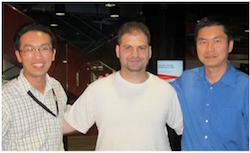
Yet talking to Tansel in person allows us to feel for ourselves what a truly successful individual Tansel is. He is truly happy with his life. A life he purposefully crafted for himself and his wonderful family.
Below is the transcript of our 2013 interview with Tansel.
The interview was held at City Campus of RMIT University on Swanston Street, Melbourne.
Ken: Good morning Tansel. It is so good to have you here with us.
Could you please briefly introduce yourself and tell us what you do?
Tansel: Pleased to be here. I started in IT support having completed my undergraduate IT degree, and when I was working in the corporate environment, I found it really boring, and kept forgetting many things. I was bullied by my manager, which made things worse and I was unaware of this at the time.
So, I went into other job in IT and I realised that even though IT is what I have always wanted to do as a child, my brain wasn’t really working the way ‘work’ should be done – in structured linear format – how people wanted it to. I had so many ideas that would not fit in to how people wanted to do things. And that continued on for a very long time until it all clicked and I realized that my brain was working differently.
I did my own research and study and unlocked my hidden potential to development myself personally, on a level I’d never thought was possible. This was so exciting I had to get it out to the public. So I started training people on personal development. As my passion for personal development grew, I found out the potential not only for me but also other people as well. So I started my own business training people for the past twelve years in soft skills, personal development, and memory.
Ken: So you get a lot of satisfaction from helping people?
Tansel: Yes great satisfaction, as well as frustration, because things like learning quickly and personal development have not even been taught at schools. Things like speed reading, memory. Speed reading used to be taught years ago sometime in the sixties. But nowadays, no one even knows about it.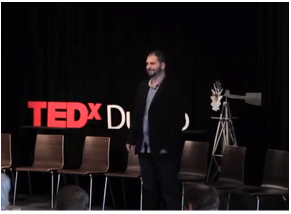
They just thought people who speed read, or remember everything are gifted. I am certainly not gifted at all. I can forget anything without using techniques. The same applies to everything else. If they learn the strategies and techniques, then they can then do amazing things.
Ken: Please tell us about your plans for the next five year.
Tansel: Over the next five years, we are looking at more social entrepreneurship using my memory business. So, it is about how to benefit the communities using personal development strategies. For example, I have finished a one-year program to develop a learning framework helping people to learn Chinese using the memory model. Once I get that rolled out into schools, I hope it will start benefitting everyone else interested in learning languages as well.
I have also got initiatives to help the homeless, to train them not only in memories strategies but also systems in learning quicker to help them with work prospects. We want to help them get off the streets. There are many social initiatives and projects that can be developed from the use of understanding how our minds work. I am really looking forward to the challenges and hopefully success ahead.
I also work with young people to develop their entrepreneurial skills, business skills, or helping them write books or get their foot into the media. So there are a lot of those areas that I am also looking forward to as well for my business.
Personally, I believe I have sort of done what I wanted to do. Now it is more about other people because I know that I have certainly helped myself and that’s good. I will never stop developing myself and learning new things.
It is also about how I can focus on helping other people. My goal for the next five years is not about making myself famous, but I want the message to be famous. That is what I am looking at now. That is my goal for the next five years.
Ken: Can you tell us how are you going to go about doing that?
Tansel: Well, it is a long work in progress. But, it is all about planning and strategizing. If I do not do that I will end up doing all the operational, day-to-daystuff, like ‘OK, this is my job, here is the process, and then five years would have past and I would ask ‘What have I done?’ So, it is very important that I have a plan and a strategy.
Obviously, I cannot do it all alone, so I have to ask myself questions like ‘Who I am going to partner with?’, ‘How am I going to raise my family?’ etc. I have to work out how everything is going to fit in the scheme of things.
Michael: I just want to ask a question in reference to what you have just said. Previously you said that memory techniques and speed reading are not being taught in school at this stage. Are there any courses being developed for them in this area? Or do they show interest or demand in this area of memory development techniques in Australia?
Tansel: Good question. In Australia, not really. To be honest a lot of the people in Australia are more conservative. That means, they value education but not as highly as in other countries, let’s say Malaysia, China, or certain parts of Europe.
So, I guess it is about building that excitement in Australia and the only way to do this is to really get out there in the media not just as a memory champion, but also to tell people you can do this in half the time or whatever to get people motivated to learn quicker.
And once they start to getting motivated they will realize they can do so much more with an enhancedmemory, such as 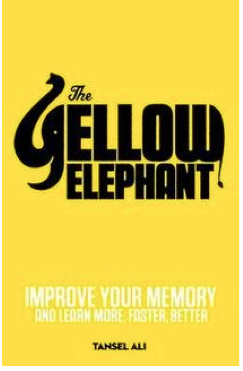 having a better career,etc. rather than not even trying. So, it is all about exposure and awareness at the end of the day. I can do so many things but if it is not out there and people do not know about it, then I am not benefitting anyone even myself.
Michael: In sharp contrast, memory skill is in huge demand in places like Malaysia.
Tansel: Yes, it is a huge difference. Even myself, I did not believe it as well.
Michael: Memory skills can actually help us live a more effective and efficient life as well.
Tansel: Certainly, literally in all different areas such as business, career medicine.
Michael: It’s like making our minds go to the gym, to exercise the mental muscles isn’t it?
Tansel: Yes, that is why I call one of my workshops ‘memory gymnasium’. The more you work on the muscles in the right way, the fitter they get. Imagine the benefits you will get by training your body and your mind. Like anything else in life, if you do not train them, they will sort of go backwards.
Michael: Exactly.
Ken: Tansel, I can you tell us a bit about the work you are doing for one of your favorite football (Aussie Rules) clubs?
Tansel: The idea is to train both their left and right brain so that they can become more creative in the games. You see old players usually know their game plans and tactics by heart but they do not have that much speed and stamina whereas younger players are fitter and faster but they might not be familiar enough with the game plans and tactics especially in times of great pressure.
Ken: Who are some of your major influences in life? Who do you want to thank for your achievements today?
Tansel: It has to be my parents, my grandparents. My grandparents came to Australia from Greece in 1933 and they had no money, no nothing and they worked in the factory and now they have become successful business people and have raised amazing children (my parents) as well. So there has always been a really good work ethic from them.
And my grandfather is a great entrepreneur because he knew where business is heading, the future and he has a vision etc. To be a successful entrepreneur you need to have a vision and that is what he had. Imagine not knowing anything about any country and taking that brave step forward to some place you have never been and to be successful. That to me is just amazing. And I am trying pass on these good values to my children as well.
Ken: On that note, can you give us some good parenting tips?
Tansel: I try to be that role model for them. Whatever I do, I try to do it well. For example, if I want them to display manners at all times, I would do it myself first. So, if I sneeze in the car, I will say, “excuse me”. My youngest daughter is now copying whatever her elder brother is doing so and so forth.
And I have changed my whole work around to be with my children as much as possible. That’s why I have gone into my own business just so I can spend a lot more time with them. It is great because I can drop them off in school in the morning and then picked them up as well and I still a lot of my work done. Which is great, so just being able to spend that time with them gives me so much more opportunities to connect with them.
Ken: What kind of advice would you give for young people aspiring to become entrepreneurs?
Tansel: Yes, being an entrepreneur is very difficult. You are taking the extra step to do your own thing. In this society where you have been constantly being bombarded with lines like you have to do this and you have to do that, so you are sort of going against all that in a way when you decide to do your own thing. So you need to be brave is the first thing.
Michael: And the fact that we have not really been trained in school to become an entrepreneur means that becoming one is sort of like going off the ‘right’ direction.
Tansel: It is. In my eleven years of being an entrepreneur, I have made a lot of mistakes, mostly which were financial and mental. Being an entrepreneur is a mental skill that needs to be worked on as well.
Something that took me years to figure out. I was also doing such things as a lot of free work, putting in endless hours, work three jobs and still doing my own personal things as well. But I am a lot happier now that I have gone through all that because I now know what works and what doesn’t. And being an entrepreneur allows me more time to work on myself because being an entrepreneur isn’t just about doing A B C D and E.
It is about more than that. You have to work on yourself – mentally and physically, be brave and be prepared to make mistakes. I was reading an article the other day which says that entrepreneurs are successful because they have made more mistakes than anyone else.
It is not just about having the ideas. It is also about what we do about them and how we chose to enjoy them.
Ken: What is your view about social media and being and entrepreneur? My take is that we should all have a blog ourselves so that we have more control over our career and our future. Please share your views.
Tansel: Yes sure. Social media is a huge phenomenon. One great benefit of the social media is that you get the whole world at your feet now. There is now the avenue for the whole world to recognize you – not just Australia. So what does it mean? It also means a whole lot of other people doing the same thing as you. So you have to get yourself more out there to get yourself known.
How do you get yourself known? That’s another question to answer. And it is more important to understand why we need social media rather than just jumping on the whole social media bandwagon. A lot of companies get on to social media in very big ways but sometimes it damages their brands! It can backfire because they (these big companies) have not really understood why they need it. There needs to be a strategy behind social media and that’s why you have so many social media professionals offering this service at the moment.
Michael: Yes, I totally agree with you.
Tansel: Yes, one of my failed social media experiments is paying for Facebook advertisements. You see, I have over ten thousand likes on my page and I thought this is great but nothing was happening in terms of user engagement! Haha… and I thought ok, this is really interesting.
Then I came to realize that it is better to get organic traffic rather than paid traffic because you would get more real interest, hence more user engagement. So it shows that maybe my strategy should more towards developing engaging, thought-provoking content rather than purchasing traffic … you know little things like that.
Well, sometimes, there are some things you can purchase and it does really well. But in some other situations, it is better to do something else other than purchasing the traffic. So it is about learning what works and what doesn’t.
Ken: Here is the last question. Australia is now facing lots of challenges economically. What is your advice for businesses? What should the survival strategy be?
Tansel: I would tell them to start developing themselves as people and investing in learning. For a lot of companies, training is the first thing they get rid of when the going gets tough. As the saying goes – investing in knowledge pays the most interest.
Michael: What is the corporate training culture in Australia? Do companies value it a lot or do they think it is not that important? What is their general attitude towards employee training and development?
Tansel: In terms of what I offer, it is still in its infancy. People still do not understand how these things (memory techniques) are being used. So I need to show them how they can save time using these memory techniques. For example, how can I present better without using notes?
Michael: Isn’t it very obvious how having a better memory can save us time?
Tansel: It is, but many companies still have this tunnel vision. So I will have to show them that having a better memory will actually help us communicate better. Because now you would know what is a better method of telling a story to people, and what is a better method of connecting with an audience.
And that’s another benefit of memory. Instead of saying I am going to remember how to present, you are now saying I am going to engage with the audience which is the whole reason for public speaking, or teaching or learning! How do I communicate the message effectively. That’s what it is about. It’s not about remembering your presentation. Memory is about developing yourself and then all other things will follow that people will never be able to see.
Michael: That’s so true. Thank you so much Tansel!
Ken: Thank you so very much Tansel for this wonderful interview!
Tansel: Thanks for having me!
This article is contributed by Ken and Michael Soong the co-writers of Making It in Australia (by Ken Soong, Ilja Thomas Gull & Michael Soong).
